The Fragility of Nature
The Summer BookThe Fragility of Nature is not an abstract lesson but a condition the island’s inhabitants repeatedly encounter: moss can die under repeated footsteps, a forest has survived by maintaining a precarious balance, and ambitious planting can leave the surrounding land parched. The Summer Book sets careful attention to living systems against efforts to tidy, build on, or cultivate the island. Nature is not merely scenery for these changes; its growth, limits, and forces shape what people can do and what their interventions cost.
A landscape shaped by vulnerability
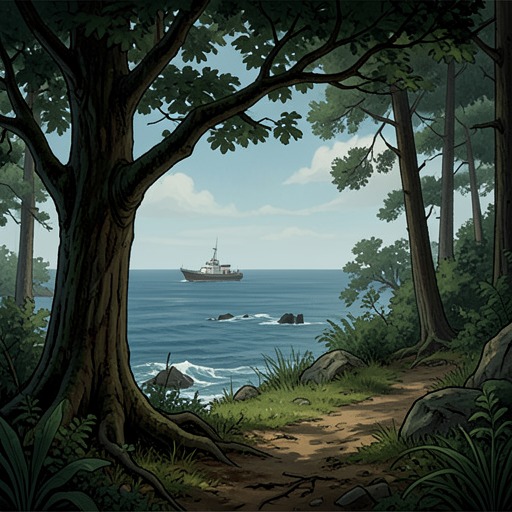
The Magic Forest lies beyond the island’s bare rock, directly in the path of storms. Over centuries its trees have stretched away from the wind, crouched, twisted, crept, broken, and rotted. Fallen trunks support or crush living growth, while spruces crawl through damp ground in glossy profusion. The forest’s apparent disorder is a record of persistence under pressure: its tangled mass has formed slowly, through the same conditions that threaten it.
That history makes the forest’s balance especially delicate. Clearing an opening or separating collapsed trunks might ruin it; marshy patches cannot simply be drained, and the sheltering wall of trees prevents planting behind it. Birds and small animals live deep in the thicket, usually heard only as wings and hurried feet. The forest’s value therefore rests partly in what people cannot see or easily manage. Its survival depends on leaving its structure intact rather than improving it according to human preferences.
The family initially tries to make the Magic Forest more frightening by hauling in stumps and dry juniper from neighboring islands. Their efforts splinter the wood and cut broad, empty routes through the forest. Grandmother recognizes that the attempt is going wrong but does not argue; after the others lose interest, she returns alone, crawls among the marsh and ferns, and lies beneath the branches. Her response is not to master or reorganize the place. Later, she carves indistinct animals from branches and driftwood, sometimes shaping them directly from a stump. The figures retain the character of the decaying wood and remain part of the forest rather than becoming sharply defined objects removed from it.
Small harms, lasting changes
Outside the Magic Forest, the family makes the island into an orderly park, tidying even small twigs and keeping to narrow paths across the moss. The apparent neatness depends on knowing where not to step. Moss may rise again after one trampling, but not after a second; a third step kills it. Eider ducks likewise abandon their nests if frightened up three times. These rules give small disturbances a cumulative consequence: damage may not be immediately visible, but repeated intrusion can make recovery impossible.
The seasonal landscape offers a counter-image to tidying and control. In July, fine grass and tiny clusters of flowers appear at a uniform height over the ground, sway like inland meadows, and disappear within a week. The brief display lends the island the appearance of untouched wilderness, but that impression is both temporary and dependent on restraint. Nature’s delicacy is not the same as passivity: it grows and changes, yet its recovery has limits.
The bulldozer’s road-making makes those limits suddenly visible. The bright-yellow machine lifts boulders that had rested in the moss for a thousand years, tears pine trees from the ground, and pushes through the woods toward the sea. Sophia watches the work with dread as the road opens. The uprooted trees, pitch-running white trunks, exposed roots, and drying grey soil show what the machine has done beyond the cleared track. The forest is pressed back into a sprawling chaos, and its immovable green mass makes the new road feel walled in. At the shore, the bulldozer itself slides into a hollow when the grassy bank gives way, ending at an unnatural angle. The episode does not undo the clearing; it instead sets the machine’s destructive reach beside the landscape’s capacity to frustrate human control.
Houses and claims on island space
A new house on Blustergull Rock changes the family’s familiar horizon before its owner even arrives. The square building becomes a threatening landmark and breaks the view by which island residents orient themselves. Its private-property sign turns the neighboring shore into a question of access as well as scenery: Grandmother and Sophia row ashore in protest, treating the sign as an affront. Their response registers that building on a small island changes more than vegetation. It alters who appears to belong at the outer edge of the inhabited world and who may approach it.
The house’s owner has been careful with the plants: broad catwalks cross the heather and blueberry bushes, and the junipers remain standing. Even so, the island seems lower, flatter, and ordinary to Grandmother and Sophia. The mismatch is telling. Protecting individual plants does not preserve the character of a place if the new structure feels alien to its setting. Grandmother later regards the house as a marker of change, and, whenever storms come, the family thinks about Malander and how his boat might be saved. The house and its surrounding shore remain subject to weather, even as the construction establishes a new human claim on the view.
Cultivation, drought, and natural limits
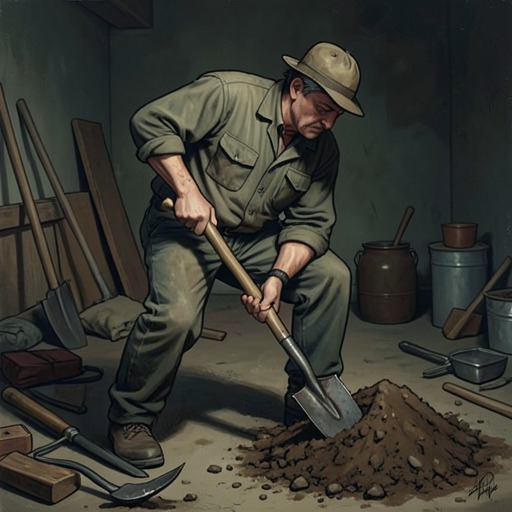
Sophia’s father undertakes a more intimate transformation of the island through gardening. After reading flower catalogues, he orders bulbs from Holland and spends the winter learning how delicate plants must be protected from cold, heat, mice, storms, frost, and the sea. On returning, the family brings black inland soil, shrubs, trees, and many young plants. He tears up the turf, digs into the bedrock, builds windbreak walls and trellises, and plans a concrete dike around the marsh pond. When Grandmother notes that raising the marsh will affect the junipers, Sophia favors the water lilies; Grandmother says nothing, but plans to rescue the broken turf because it contains daisies. Their different priorities make the garden’s costs visible even before the new plants grow.
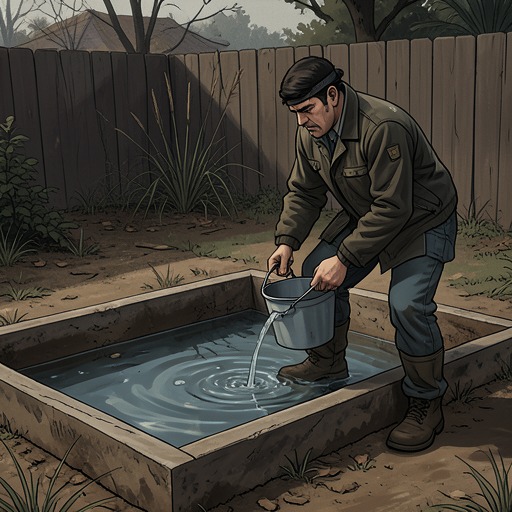
For a time, the planting succeeds. The Dutch bulbs open, roots spread within the dike, and shoots appear across the island. But the garden’s elaborate watering system cannot spare water for the native turf. Hoses and sprinklers deliver measured amounts from the island’s largest rainwater basin to plants with different needs, while the surrounding land turns brown. The turf curls up at its edges, spruces die, and the basin sinks until it is empty. Rainstorms remain along the coast without reaching the island. The garden’s care is real and methodical, yet its demands shift scarcity onto the rest of the landscape.
Sophia’s father responds by bringing an Enormous Plastic Sausage to carry water from a bog. At Bog Skerry, the pump fills it slowly into a huge orange balloon containing thousands of litres. But towing it is not a simple extension of the plan: it initially will not move, then sinks into the water as the boat strains forward, leaving less than four inches between the gunwales and the surface. The attempt shows human ingenuity working within material conditions it cannot dictate. Across these episodes, the island’s fragility lies neither in an ideal of untouched nature nor in a prohibition on human activity. It lies in the close dependence of living things on particular ground, water, shelter, and restraint—and in how easily a plan for one part of the island can endanger another.